

Over the past two years, the automotive LiDAR market has faced fierce competition. As shipment volumes have surged, prices have continuously dropped. David Li, CEO of Hesai Technology, once remarked that in the LiDAR industry, "You have to drop either 'China' or 'Automotive' from the equation to actually make a profit."
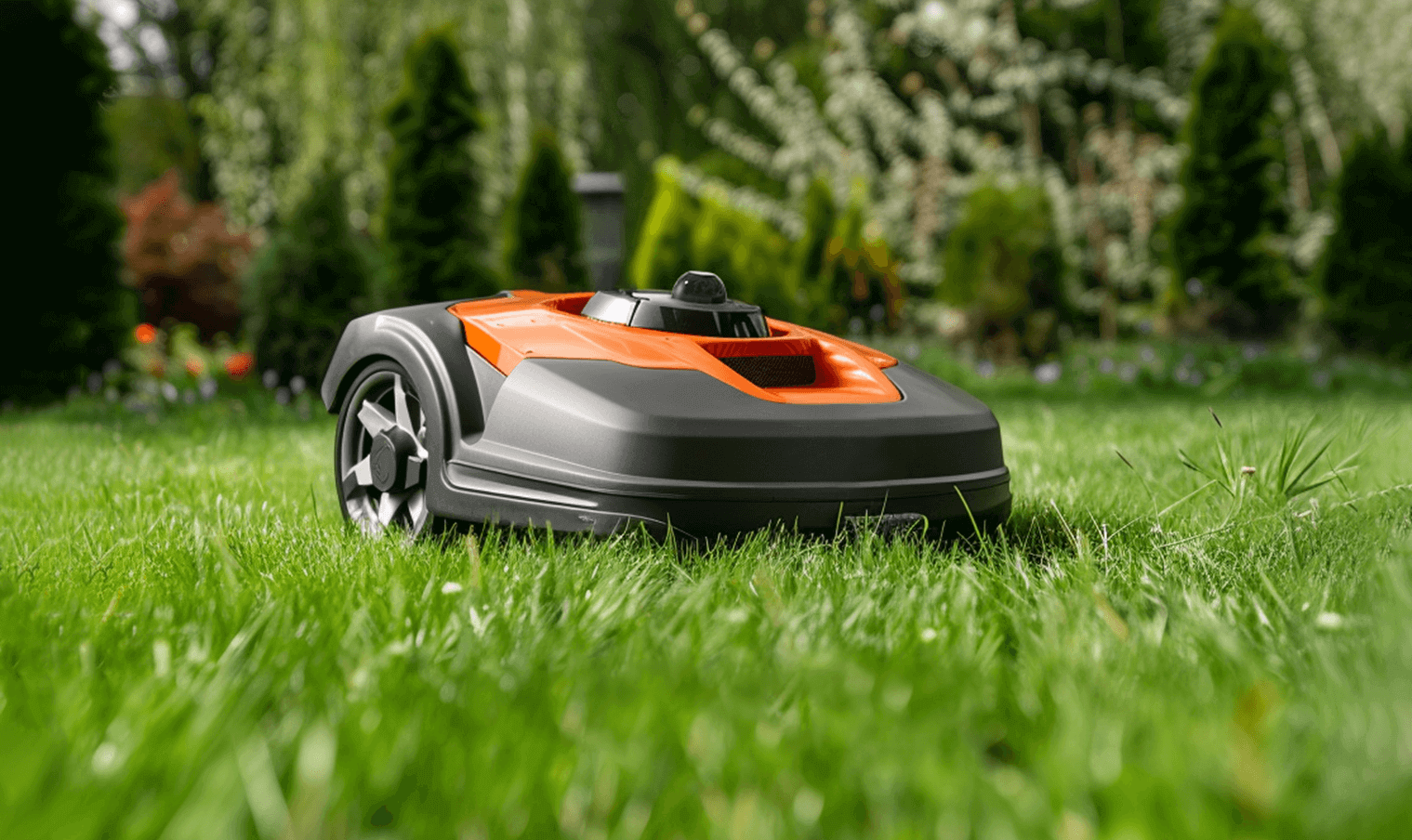
However, a new application scenario for LiDAR has recently emerged: One whose primary market is neither in China nor in the automotive sector. Growing at an unprecedented rate, it has captured the widespread attention of LiDAR industry professionals: Robotic Lawnmower.

According to China Insights Consultancy (CIC), global sales of smart robotic lawnmowers reached approximately 383,500 units in 2024, representing a market size of $870 million. Yet, the penetration rate in the global lawnmower market remains incredibly low at less than 2%.
Driven by technological breakthroughs and surging market demand, both sales and penetration rates are poised for explosive growth. By 2029, the penetration rate is projected to reach 17%, with the market size swelling to approximately $680 million. In the long term, the Total Addressable Market (TAM) for smart robotic lawnmowers is expected to exceed $4.28 billion.

Recognizing this potential, robotics manufacturers like Dreame, KUMAA, ECOVACS, and HOOKII are fiercely competing for market share. In this race, LiDAR is rapidly becoming the focal point of next-generation perception solutions. The next blue ocean for LiDAR has officially arrived.
Perception Stacks in Robotic Lawnmowers: What Are the Demands?
1. The Perception Challenge
Robotic lawnmowers share similarities with robot vacuums, but their outdoor operating environments are vastly more complex. Achieving reliable localization, navigation, and obstacle avoidance involves overcoming several hurdles:
-
Micro-Obstacles: Lawns are littered with objects under 15cm tall (e.g., pebbles, frisbees, tennis balls, garden tools, hoses, pet waste). Missed detections can cause severe damage to the mower or the objects.
-
Complex Weather Conditions: The perception system must adapt to rain, fog, dust, and harsh direct sunlight.
-
Uneven Terrain: Lawns feature slopes and discontinuous surfaces, requiring the mower to accurately assess terrain changes.

Historically, lawnmower perception has evolved through three stages:
-
Perimeter Wire: Manual installation of boundary cables; random bouncing paths.
-
Wire-Free (RTK): Eliminates physical wires via RTK base stations for virtual boundaries and planned paths.
-
Smart Vision/LiDAR: Incorporates visual sensors or LiDAR for intelligent localization, dynamic obstacle avoidance, and robust adaptability.
Figure: The Evolution of Robotic Lawnmower Perception Systems

Currently, the primary perception sensors include RTK, ultrasonic radars, millimeter-wave radars, Vision (Cameras), and LiDAR.
2. RTK
By processing data synchronized from GNSS (Global Navigation Satellite System) and local base stations, RTK technology provides centimeter-level, high-precision absolute positioning. This solution offers rapid data update rates and remains highly resilient to environmental interferences such as rain, snow, or dust. Furthermore, it enables integrated features like anti-theft alarms.

A prime example is the Husqvarna robotic mower, which utilizes a stand-alone RTK-based solution:

However, the deployment of RTK comes with significant trade-offs. It necessitates the installation of a fixed base station, which incurs high initial setup costs and requires periodic antenna calibration to maintain accuracy.
Moreover, RTK signals are highly susceptible to signal "shadowing" or obstruction caused by buildings and dense tree canopies. Performance can even be compromised by heavy cloud cover or high-latitude atmospheric conditions. In these scenarios, positioning accuracy can drop substantially—resulting in erratic mowing paths and operational failures.

To compensate for this signal instability, many modern robotic lawnmowers are now opting for a hybrid approach by integrating visual perception systems alongside RTK.
3. Vision Systems
Visual perception refers to the use of cameras—including monocular, stereo, or RGB-D sensors—to capture environmental image data. This data is then processed using image recognition algorithms to identify obstacles and VSLAM (Visual Simultaneous Localization and Mapping) to construct maps and determine the mower's position.
Example: Visual detection of various small target objects by a robotic lawnmower:

The primary advantage of vision modules is their relatively low cost. Additionally, both academic and industrial research into vision-based recognition and SLAM is highly extensive and mature.
Currently, a significant number of robotic lawnmower models adopt a hybrid "Camera + RTK" solution. Notable examples include:
-
ANTHBOT
-
Segway Navimow (i Series)
-
Mammotion (LUBA 2 / YUKA)
-
Sunseeker (ORON X7)
-
Airseekers
-
Terramow
Example: Segway robotic mowers utilizing RTK integrated with monocular, binocular, or trinocular vision systems:

Despite these benefits, the drawbacks of pure or primary vision-based solutions remain significant:
-
Environmental Sensitivity: Performance is easily degraded by rain, fog, snow, and dust. Furthermore, vision systems often fail in challenging lighting conditions, such as low light (dusk/night), harsh backlighting (glare), or in "low-texture" environments (like uniform green grass without distinct features).
-
Missed Detections of Small Objects: There is a high risk of failing to detect low-profile or small-volume obstacles on the lawn, leading to potential collisions or equipment damage.
-
Terrain and Slope Challenges: In complex, undulating terrain, vision systems struggle to accurately assess changes in slope. This can lead to inefficient power distribution, causing the mower to lose control on descents or lack sufficient torque for ascents.
-
Poor Adaptability to Complex Boundaries: Vision-based systems often struggle to navigate intricate spaces such as hedges, flower beds, fences, and steps. Improving performance in these areas requires massive amounts of scene-specific training data, making development highly complex and time-consuming.
-
Inherent Privacy Concerns: Cameras constantly capturing data in private backyards inevitably raise concerns regarding user privacy and data security.
4. 3D LiDAR
3D LiDAR has emerged over the past two years as a cutting-edge sensor solution for the robotics industry.
By leveraging 3D LiDAR, robotic lawnmowers can achieve centimeter-level positioning independently of RTK systems. Furthermore, this technology enables precise detection of small objects, remains unaffected by ambient lighting conditions, significantly reduces deployment time, and drastically improves mowing efficiency.
Compared to the traditional "RTK + Camera" stack, the primary advantages of 3D LiDAR are as follows:
1) Superior Precision in Localization and Ranging
LiDAR performs direct distance measurement (active ranging), ensuring high-precision localization. Even in complex environments with dense tree canopies or significant terrain variations, LiDAR guarantees the accuracy and reliability of the mower's path planning.
In contrast, "RTK + Camera" systems often suffer from degraded performance in obstructed environments, where accuracy can plummet from centimeters to several meters.
Example: A comparison of positioning trajectories between RTK and LiDAR in obstructed environments:

2) Efficient and Precise Mapping Without Manual Deployment 3D LiDAR—specifically 360° LiDAR—utilizes 3D SLAM (Simultaneous Localization and Mapping) technology to complete high-efficiency 3D environmental reconstruction of a yard.
Based on field-test data, a 3D LiDAR-equipped mower can construct a comprehensive 3D map of a 1,000-square-meter lawn in just 3.5 minutes. This drastically reduces labor costs and deployment complexity compared to manual boundary setting.
Comparison: Mapping efficiency of LiDAR vs. the "RTK + Camera" solution: Visual: 3D environment mapping output achieved via 3D LiDAR:

Visual: Yard mapping reconstruction achieved using 3D LiDAR:

3) Robust Recognition of Small, Irregular, and Low-Texture Objects LiDAR systems are highly effective at identifying small targets, unconventional obstacles, and low-texture scenes, significantly reducing the risk of missed detections (false negatives).
Because LiDAR is an active sensing technology that emits its own laser pulses, it is completely immune to ambient light. Whether operating at night, identifying irregular obstacles not in a "pre-defined whitelist," or detecting objects that blend into the color of the grass, LiDAR provides precise, real-time perception. This empowers the mower with rapid, stable active response capabilities and omnidirectional dynamic obstacle avoidance in complex environments.
Conversely, "RTK + Camera" solutions are highly sensitive to lighting. Their obstacle recognition rate drops significantly at night, posing substantial operational safety risks. Comparison below:
Summary: Key Advantages of 3D LiDAR vs. "RTK + Camera"

The Current Landscape of LiDAR in Robotic Lawnmowers
Currently, based on their Field of View (FOV) coverage, LiDAR sensors utilized in robotic lawnmowers can be broadly categorized into two types: 360° Hemispherical LiDAR and Forward-Facing LiDAR.
Technologically, 360° Hemispherical LiDAR primarily adopts mechanical or semi-solid-state scanning architectures, whereas forward-facing LiDAR predominantly relies on pure solid-state Flash solutions.
1. 360° Hemispherical LiDAR
A 360° Hemispherical LiDAR achieves a full 360-degree horizontal coverage by physically rotating its transceiver modules or scanning mirrors.
Because it can simultaneously scan the entire 360-degree environment surrounding the mower, it delivers significantly higher perception efficiency, thereby drastically reducing the time required for environmental mapping.
In contrast, if a mower solely relies on a forward-facing LiDAR, the robot must constantly move back and forth or pivot in place to achieve a complete environmental perception.
Consequently, the majority of LiDAR-equipped robotic lawnmowers on the market today—such as the MOVA 600 / 1000, Dreame A1 / A2, KOOHII NEOMOW X, and ECOVACS GOAT A3000—have adopted 360° Hemispherical LiDAR solutions. They leverage its omnidirectional detection capabilities to deliver significant technical advantages.
Below is an overview of the prevalent 360° Hemispherical LiDAR products currently driving the robotic lawnmower market:
1) Hesai JT16
JT16 is a miniature 3D Hemispherical LiDAR explicitly designed by Hesai for the robotics market.

Key specifications are as follows:

The JT16 has already entered mass production and is actively integrated into MOVA robotic mowers (MOVA 1000 and MOVA 600):

Notably, in April 2025, Hesai Technology signed a strategic partnership agreement with Keting Technology (the high-end smart yard brand under Dreame). Under this agreement, Hesai will supply Keting with 300,000 units of the JT series LiDAR over the next year.
2) Livox Mid-360/Mid-360S
Released in January 2023, Mid-360(Mid-360S is now the second-generation, released in April 2026) is a 360° Hemispherical LiDAR developed by Livox, utilizing a distinct dual-prism scanning architecture.

Key specifications are as follows(Mid-360S):

For instance, HOOKII’s NEOMOW X is equipped with a Livox Mid-360:

Additionally, the ECOVACS GOAT A3000 LiDAR utilizes an advanced "RTK + Dual LiDAR + Vision" perception stack. This setup features a top-mounted Mid-360 combined with a front-facing 3D ToF LiDAR:

3) RoboSense Airy
RoboSense Airy is a miniaturized, lightweight, and true hemispherical 360° digital LiDAR.

Airy is powered by an advanced VCSEL + SPAD-SoC transceiver architecture.
Key specifications are as follows:

2. Forward-Facing LiDAR
The Field of View (FOV) of forward-facing LiDAR is highly comparable to that of forward-facing visual cameras. Currently, the market in this segment is dominated by pure solid-state Flash solutions.
1) Hesai FTX
The FTX is Hesai’s newly launched, pure solid-state, automotive-grade LiDAR. Boasting an expansive FOV of 180° × 140°, it is currently the widest near-field, ultra-wide-angle LiDAR available on the market.
Compared to its predecessor, the FTX delivers a greater than 2x improvement in resolution while reducing the exposed window footprint by 40%. It is exceptionally adept at precisely detecting low-lying obstacles such as curbs, flower pots, and pets.

2) RoboSense E1R
The RoboSense E1R is a customized solid-state LiDAR engineered specifically for robotic lawnmowers.
The E1R integrates the world's first digital SPAD-SoC alongside a 2D VCSEL chip.
Key specifications are as follows:

In May 2025, RoboSense and AgileX Robotics (Mammotion) announced a strategic partnership to jointly develop high-end robotic lawnmower solutions powered by automotive-grade, pure solid-state LiDAR technology. The initial contract secures a massive order of 1.2 million units over a three-year period.
The E1R will be deployed on the LUBA mini AWD LiDAR robotic mower, a model that utilizes a hybrid "Monocular Camera + Pure Solid-State LiDAR" perception stack.
Installation diagram:

Conclusion
China's LiDAR technology continues to lead the global stage, with domestic brands relentlessly pushing the upper limits of performance while simultaneously breaking through the lower floors of cost.
As perception and control technologies advance rapidly, the physical form and capabilities of lawnmowers are being completely reshaped by smart tech. Various types of LiDAR are playing an increasingly pivotal role in the evolution of intelligent robotic lawnmowers.
The robotic lawnmower sector has undeniably emerged as the next blue ocean market for the LiDAR industry. We look forward to seeing these outstanding LiDAR products continue to shine and dominate across a broader spectrum of robotics applications.
Share:
The Mid-360S is Here: Key Upgrades to the Classic LiDAR After Three Years